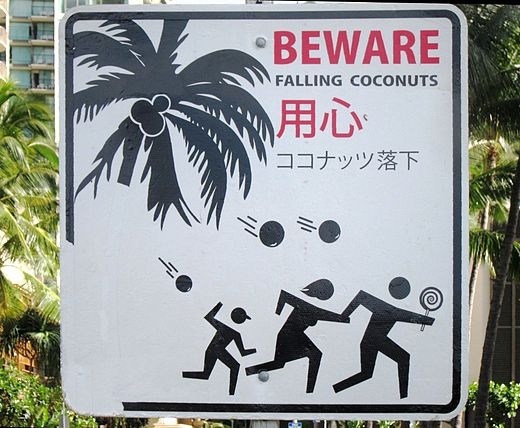
I am currently in Tulum. The beaches here are covered with coconut palm trees. I want to plant some on my beach and was wondering if anybody has tried it? If I supplied water in the summer would the trees stand a chance?
I had some planted at my house a few years ago, they took a sprouted coconut, dug a hole, dumped course rock salt in the hole, they grew for about a year until we came down one weekend and they had withered, probably for lack of water, but on a beach they might grow. I ssked about the salt and the guy said tbe tree needed it, because they are always grown around salt water and we were inland..
My neighbor in Cholla on the water has had a hard time keeping palms
a few different varieties alive.
Said they were watered in the summer, but who knows since he wasn't there. Don't think he ever had coconut palms.
We have Mexican fan palms on the beach. They are on a drip system & watered daily. Doing good.
I think the regular watering is the ticket. Neighbors planted palms that died. They replanted, and had a maintenance worker stop by regularly to water them (at least to get established), and they've been doing fine for years.
We water daily because the sand drains very quickly. It's not like planting in dirt where the dirt will hold the water & stay moist for days. Sand dries out quickly so water more often but with less water. At least that's what we've come up with.
I love palm trees. I wish I could find the folks in Rocky Point who are responsible for trimming the ones on the public streets. They trim them too tight and put the trees into stress.
Everyone likes to trim them to the top 3 or 4 fronds so they can trim less frequently. That doesn't leave enough fronds to perform the photosynthesis needed to feed the tree and protect the most sensitive parts from the elements.
Many recommend trimming one time per year, cutting only the dead fronds. I target June so the seed fronds have spouted. I admit I trim to "10 and 2" on the clock. With a full top, a couple dead fronds below the crown don't bother me, look natural....
My palms look great all year long and by the following year....ready for another trim....
Per John at Integrity Tree Service-
Trim Mexican fan palms after June 15th to be sure to get all the seed pods in one trimming. You can also trim Queen palms anytime after June 1st but expect some seed pods to continue to emerge through the fall.
Trim California fan palms after July 15th to insure getting all the seed pods in one trimming. If you don't want to put up with all the yellow pollen until July, you can prune the trees earlier, but you'll need to trim the trees again later in the year to get the rest of the seed pods.
When I had Mexican Fan palm trees, I would always wait until July 1st to make sure the trees bloomed.
One year I was talked into trimming before July 1st, not realizing they hadn't grown the pod branch and I had seeds and pollen in my pool for 3-4 weeks.:mad:
When I had Mexican Fan palm trees, I would always wait until July 1st to make sure the trees bloomed.
One year I was talked into trimming before July 1st, not realizing they hadn't grown the pod branch and I had seeds and pollen in my pool for 3-4 weeks.:mad:
Been there myself, that's why I told my HOA to back off because I'm not going to pay a guy to trim my tree twice in a season
I've seen Mexican fan palms on the beach- you have to bring in the right soil, water quite a bit, and hose the salt off,but they do grow. It looks like California has the most north growing coconut palm- they are beautiful, along w/ Tulum.
When I first move to Tucson, some 30 years ago, the house my brother and I lived at had a 35 to 40 feet high palm tree with fronds all the way to the ground in the front yard, one day we decided to trim it, with fire, lite the fronds and after a few seconds we could here a wrecking train coming but no flames about a minute passed by and then a huge explosion took place and the flames were another 40 feet high in the air, within a minute all the dry fronds were gone the flames some how dissipated and the fire trucks (2) were going crazy on how to reach the house as our street is a "u" shape and if you do not know the street you miss the turn very easily, specially if you are in a rush to get there!! by the time the firetrucks made it to the house we had the fire extincted and the yard almost clean, they asked were was the fire and we just shrugged our shoulders and they left!!! after that I decided that using a pair of pruners and a ladder is safer than fire, although I LOVE fire!!
Bougainvillea grows like a weed once established. They take very little water to grow. I had at least 40 vines at my house. The thorns are brutal, making pruning hazerdous. If you want a beautiful security perimeter plant them close and interweave the vines. Better than razor ribbon and much more atractive. A thick vine also makes an excellent walking stick with thorns to wack a miscreant or attacking dog !
Not a palm tree but the company is in Scottsdale and their trees are growing all over the place. I always wondered if these would grow in Penasco, if taken care of properly they probably would. http://www.worldtreetech.com/ World Tree Technologies is home of the Empress Splendor™ Tree, the legendary and sacred tree of the Orient. With exciting characteristics like growing as much as 20 feet per year and having the ability to re-grow itself up to 7 times after being cut down, the Empress is an obvious choice for global reforestation, bioremediation, aesthetic improvements and much more. This tree is 100% non-invasive and completely non-poisonous! The lumber is a high value hardwood, very strong, yet it is extremely light weight, and has a silky quality that makes it easy to work with. The Empress Splendor™ is also fire and insect resistant, and can produce a tremendous amount of oxygen while sequestering 6 times more carbon dioxide than other trees.
Very interesting. Wonder why it is not more popular. If those leaves are as tough as palm fronds you might have a chance, anything less would be shredded by the wind here.
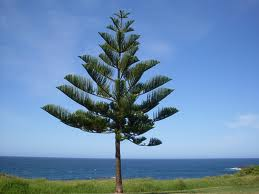
We planted what I think are called Norfolk Island Pines on the back side of the house, not the beach side. They seem to grow good in town but just don't seem happy at our place. They've grown to be about 15' tall but just don't look full & uniform. The frost we occasionally get hits them hard & then they struggle. Same thing in the summer when it gets super hot. Tried more water, less water, fertilizer, but nothing seemed to make a difference. Pic is just an example. Bougainvillea, lantana, dwarf oleander, miniature date palms all grow great, but again on the back side of the house. When we tried them on the side of the house in the "wind tunnel" they didn't make it. The only thing we've found that grows well on the dunes is ice plants. We have had good success with the Mexican Fan Palms in a masonry planter against the house on the beach side. Never tried them out on the dunes.
There was, not is The Pinacate Nursery, they were north of town at about km65 all trees, plants and cactus from this area..Didn't last too long, they were off the highway a few hundred feet and no sign..
There is a good nursery in Penasco on the same street as Telmex. Heading south on Bonito Juarez turn left at Portugal Insurance and then make the first right. About a block or so down on the west side of the street before you get to Telmex.
I have had great luck with (what the locals call Algadone) It is a big tree with big dark leaves that grow very fast. They seem to almost double in size every year, plus they flower. You see them all over Penasco. The closest English name I've found on the web is a Sea Hybiscus.
As for palms, my Mexican fan palms look great but are very slow growing. Date palms are doing very well. A couple years ago I planted coco palms and they are doing great.
Mermaid, its actually algodon or Cotton..if you check when it blooms it actually does have balls of cotton... Martin owns the nursery you mentioned and if somebody wants native plants he will find them..
Thanks Carnac. I have had my trees in now for about 5 years and have yet yo see any cotton balls. They do get a ton of flowers that are yellow in the morning, orange by noon and red in the evening and then they fall off.
I guess my trees just don't have balls.
Here are some algodones, one with cottonballs and sick and one that should look like yours if it's an algodon taken a couple minutes ago near Los Pinos
There are some trees I see around and in the park across from the municipal. Small leaves, very very dense foliage, grow quite tall, bear a small seed or fruit. I keep thinking some sort of Olive relative but don't know why I think that ??
Found this via Google. http://www.thompson-morgan.com/plants-for-coastal-gardens Plants for coastal gardens
The upside to coastal gardening is the reduced risk of frost, allowing you to grow borderline-hardy plants which other gardeners only dream of! Plants adapted to growing in coastal conditions often have tough, leathery or hairy leaves which protect the plant from salt damage and reduce moisture loss.
A plant’s Latin name can also give clues to its coastal origins, for example if the name contains ‘maritima’ or ‘littoralis’ (meaning ‘of the shore’). Have a look at your neighbour’s gardens too and see what grows well for them! We’ve listed some of the best coastal garden plants below.
Plants for coastal gardens Salt tolerant Plant type Extra features Acacia dealbata Tree
Cordyline Tree
Cytisus (Broom) Tree
Eucalyptus gunnii Tree
Sweet chestnut (Castanea sativa) Tree
Found this via Google. http://www.thompson-morgan.com/plants-for-coastal-gardens Plants for coastal gardens
Have a look at your neighbour’s gardens too and see what grows well for them! We’ve listed some of the best coastal garden plants below.
Thanks for the listing of coastal plants that do well in the area, which has been a recent project of mine. (The problem with taking my neighbors' lead is that some of those plots are beginning to look more like the Carolinas than the beautiful Sonoran desert / sea.)
What about Plumeria's? I think I have seen some around town. They will give you some height, I saw some that were easily 30-40 feet tall in Mulege on the Baja.
What about Plumeria's? I think I have seen some around town. They will give you some height, I saw some that were easily 30-40 feet tall in Mulege on the Baja.
I think that is the plant that has caught my attention lately, as well. Beautiful. But I read that they can be finicky -- early on, at least -- when it comes to the right balance of watering.
On the Gulf of Mexico coast there are coconuts from about Corpus Christi south They are doing well in the Rio Grand Valley around Brownsville.
On the Pacific Coast they are as far as Bahia de Kino and Santa Rosalia on the Sea of Cortez/Gulf of California. There may be some in Puerto Peñasco/Stoney Point as well. There are two 20'+ trees in Palm Desert near Palm Springs CA.
I have been a landscape contractor in Phoenix to Casa Grande for the last thirty years and I learned not to tell any one that something will not grow in their location.
I you decide to try it I would dig a large hole and re fill it with a mix of dirt sand and horse manure prior to planting. Plant as large as you are willing to lose as bigger is better.
I would plant in early spring and provide a light shade for the first year at least.
WATER *****
This is the most important thing. In my thinking automatic watering is a must. Trust no one !
You can use a drip system but I would use bubblers and a large watering basin. I would water about every three days for as long as it takes to keep the basin full for 20 min or so.
Use your eyes to tell if the leafs look fine to judge. Also until they get started and you feel confident in your settings, dig down about 18 in. from the trunk and 24 in deep to check moisture.
When we plant Date palms they are planted in a base of sand with drop tubes to allow the water to deep water .
I hope this helps and if you do it keep me informed .
Bill 520 251 0656
My wife works for a commercial palm tree nursery (Pacific Palms) in Phoenix. According to the owners the very easiest palm to grow is a Med Fan (Mediterranean Fan Palm). They will withstand heat, cold, and almost any kind of soil that has drainage. As someone mentioned above, never say never, but coconut palms typically only grow where there is moisture in the air, as in near a beach. They don't typically survive in areas like Phoenix. If you want a plant (a vine actually) try a Lady Banks Rose. They do need a trellis or wall to grow on, but they will grow almost anywhere. The largest one in the world in is Tucson.
In Cholla Bay my water front neighbor has planted a few different types of palm trees and other trees.
His Mexican fan palms when small do fine, a soon as they grow up over his block wall they really struggle.
During the summer time they really struggle from the heat and constant wind from the SE direction.
He has them on a timed drip system because too many times he payed someone to water them and they didn't (you know the story).
He tried coconut palms and they lasted less than 2 years but he had somebody watering them for him who was terrible about doing it.
Funny, it seems the further away from the ocean the better any foliage will do (100 feet makes a big difference).
What about Plumeria's? I think I have seen some around town. They will give you some height, I saw some that were easily 30-40 feet tall in Mulege on the Baja.
I have two plumerias growing in Phoenix that were my daughters 5th grade science experiment 15 years ago. In my experience Plemerias need protection from the frost and a lot of water.
PP is way too hot, way too cold and way too dry for Coco Palms as they are tropical plants. The biggest issue when attempting to grow anything close to the beach in PP is SALT. Most desert plants just can't take it, a few just love it and some can put up with it....to a point. A short list of salt tolerant types are: California Fan Palms, Date Palms, Honey Mesquite, Athel Tamarisk and the Senita Cactus. Those were the traditional plants around seaside settlements up and down the Gulf of California since the mission days.
I saw Coco Palms in five gallon pots for sale here at the Yuma Home Depot last week. They are actually quite easy to grow when conditions are right. It's just a simple matter of finding sprouting Coconuts on the beach and barely covering them with dirt. One of those three dents at the top of the Coconut will sprout out a big root and the first leaf then it's ready to rock. Someone in SoCal musta figgered it out and is cultivating them in a greenhouse. Just like Avocado trees also sold at Lowe's and the Depot it's a hopeless quest here in el desierto.
Of course there are isolated cases where the tropical stuff is making it. Across the street from my home here in Yuma I can see a twenty foot Plumeria, and a few blocks away someone has managed to grow a thirty foot Mango tree that actually produces fruit. I have a spectacular specimen of the Senita Cactus in my yard. I brought it home from the Bahia Kino area about thirty years ago as a ten inch tall rooted joint. It barely grew two feet in ten years until I started dumping my salt water aquarium water on it when I changed the water. It is now eighteen feet tall with about fifty branches, makes a thousand flowers every summer that are pollinated by nectar feeding bats then makes several hundred juicy red fruits that are in turn eaten by fruit eating bats, Mocking Birds, Gila Woodpeckers and Whitewing Doves.
PP is way too hot, way too cold and way too dry for Coco Palms as they are tropical plants. The biggest issue when attempting to grow anything close to the beach in PP is SALT. Most desert plants just can't take it, a few just love it and some can put up with it....to a point. A short list of salt tolerant types are: California Fan Palms, Date Palms, Honey Mesquite, Athel Tamarisk and the Senita Cactus. Those were the traditional plants around seaside settlements up and down the Gulf of California since the mission days.
I saw Coco Palms in five gallon pots for sale here at the Yuma Home Depot last week. They are actually quite easy to grow when conditions are right. It's just a simple matter of finding sprouting Coconuts on the beach and barely covering them with dirt. One of those three dents at the top of the Coconut will sprout out a big root and the first leaf then it's ready to rock. Someone in SoCal musta figgered it out and is cultivating them in a greenhouse. Just like Avocado trees also sold at Lowe's and the Depot it's a hopeless quest here in el desierto.
Of course there are isolated cases where the tropical stuff is making it. Across the street from my home here in Yuma I can see a twenty foot Plumeria, and a few blocks away someone has managed to grow a thirty foot Mango tree that actually produces fruit. I have a spectacular specimen of the Senita Cactus in my yard. I brought it home from the Bahia Kino area about thirty years ago as a ten inch tall rooted joint. It barely grew two feet in ten years until I started dumping my salt water aquarium water on it when I changed the water. It is now eighteen feet tall with about fifty branches, makes a thousand flowers every summer that are pollinated by nectar feeding bats then makes several hundred juicy red fruits that are in turn eaten by fruit eating bats, Mocking Birds, Gila Woodpeckers and Whitewing Doves.
JJ
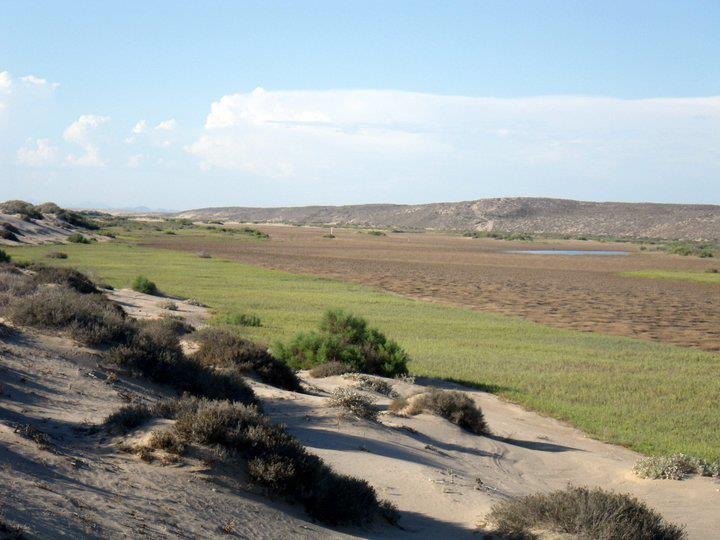
like that! I plan on taking my paddleboard back here and snoop around for plant life unusual this spring...about a mile south of the spit...
Nice photo of La Lagunita! Ever catch any clams there? Ten years ago there was a shrimp boat run aground there on the other side kinda midway in yer photo, not a trace of it anymore. Back then you could drive a Jeep through the mouth of the lagoon at low tide, no mas. Last time there the channel at low tide was four or five feet deep and running like a river. On the top left of yer photo just to the left of that white post you can barely see a small stand of trees on the beach where a steep sandy road comes down now giving access to the final run up to the point.
The bright green stuff along the shore in yer pix is Pickle Weed, just beyond on the bare mud is the habitat for Fiddler Crabs and farther out in the pool is where you can find the burrows of the white Ghost Shrimp that make some of the best bait for shore fishing. Beware when paddling around out there, when we were contemplating crossing the channel we saw dozens of Round Sting Rays scootin out to deeper water.
I have been a landscape contractor in Phoenix to Casa Grande for the last thirty years and I learned not to tell any one that something will not grow in their location.
I you decide to try it I would dig a large hole and re fill it with a mix of dirt sand and horse manure prior to planting. Plant as large as you are willing to lose as bigger is better.
I would plant in early spring and provide a light shade for the first year at least.
WATER *****
This is the most important thing. In my thinking automatic watering is a must. Trust no one !
You can use a drip system but I would use bubblers and a large watering basin. I would water about every three days for as long as it takes to keep the basin full for 20 min or so.
Use your eyes to tell if the leafs look fine to judge. Also until they get started and you feel confident in your settings, dig down about 18 in. from the trunk and 24 in deep to check moisture.
When we plant Date palms they are planted in a base of sand with drop tubes to allow the water to deep water .
I hope this helps and if you do it keep me informed .
Bill 520 251 0656
Bill, I want to find a date palm 3M tall. any idea where, or if one that big can be transplanted?
I am currently in Tulum. The beaches here are covered with coconut palm trees. I want to plant some on my beach and was wondering if anybody has tried it? If I supplied water in the summer would the trees stand a chance?
If you don't see them naturally then they aren't NATIVE. Non native plants need a lot of care. A pine tree grows in Phoenix with enough water but unattended for stretches of time without water??? No chance.




 taken a couple minutes ago near Los Pinos
 Tree
Tree